 Skip to content
Insight teams are under intense pressure to adopt AI - but figuring out where it genuinely adds value (and where it doesn't) is the real challenge.
We sat down with our COO, Jonathan Clough, to get his take. As one of the architects behind STRAT7 Nucleus, he’s spent months working with clients and insight leaders, helping teams put AI into practice.
The conversation covers synthetic data risks, why human oversight still matters and entirely new ways of approaching research.
Q. The pressure on insight teams to demonstrate AI value is intense right now. Why did STRAT7 decide to build Nucleus?
Insight teams are under real pressure to show how AI can accelerate speed to insight, reduce costs, and increase impact. But a lot of tools entering the market research space are opaque and unproven. They create anxiety rather than confidence.
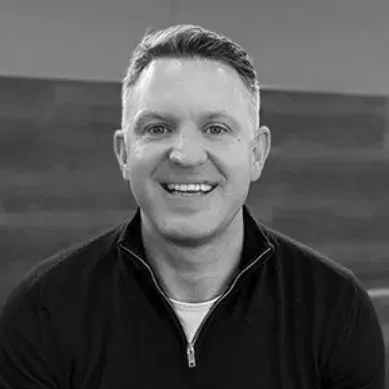
Jonathan Clough,
COO, STRAT7
Take synthetic respondents. The pitch sounds great: cost-free AI-generated survey responses that can run thousands of surveys every hour. But when you look at the methods, even providers claiming 95% accuracy are admitting that 5% might be wrong. If you’re building a global segmentation or making a major product decision, 5% wrong means millions in wasted investment.
The feedback from insight leaders was clear: they need to use AI where it makes sense, but they also need human oversight and a trusted advisor to help them work out what works and what doesn’t. That’s what Nucleus does – it’s our proprietary AI hub, used exclusively by STRAT7 consultants giving our clients access to our capabilities with greater speed, precision, and impact.

Q. There are a lot of AI tools in the market. What makes STRAT7’s approach different?
We started by agreeing principles rather than jumping straight to building tools. We worked extensively with clients to understand what they actually needed, and that shaped six principles guiding everything we do.
One of those principles is ‘humans stay in control’. AI does the heavy lifting, our people do the heavy thinking. Every output gets human oversight.
We’re deliberate about purpose-led adoption. We don’t use AI for everything. We use it where it delivers genuine value and we’re transparent about what we’re using, how it works, and what its limitations are. If AI won’t work for a brief, we say so. The trusted advisor relationship matters more than selling AI.
That’s fundamentally different from vendors pushing tools. We’re integrating AI into consultancy to make the consultancy better, not replace it.
Q. This is the question everyone asks: will AI replace research teams?
No. And we don’t want it to.
Our philosophy is human intelligence augmented by AI. We’re investing in training across the company to develop what we’re calling AI-certified consultants. People who understand how to prompt agents effectively, how to evaluate outputs critically, and how to get real value from the tools.
The shift is that consultants become orchestrators. They control what the AI does, interpret what it produces, and add the context only a human can provide. The client relationship, the business strategy, what’s been tried before. AI can’t know any of that. Only a consultant who’s worked with that client can bring that perspective.
So AI changes what people do, but it doesn’t replace them. It frees them to focus on the thinking and the impact rather than the processing.
Q. What can you do now with Nucleus that wasn’t possible before?
The efficiency gains are real, but perhaps the more interesting piece is innovation.
When you remove the constraints of manual processing, you can challenge methodologies that weren’t feasible before. If you can have an agent generate descriptions of 40,000 products in real time and layer them against consumer need states, you approach product optimisation completely differently. That analysis would have been prohibitively time-consuming six months ago.
We’re developing new approaches to briefs that simply couldn’t have been done before. That’s genuinely exciting because we’re not just doing the same work faster. We’re doing different work.
Q. What’s surprised you most about client reactions to Nucleus?
A mixture of relief and excitement!
There’s been so much noise about AI and so many vendors making big claims that clients have been understandably sceptical. What we’re hearing is that our approach feels reassuring because it’s not about a single tool promising to solve everything. It’s the trusted relationship they already have with us, plus confidence that we’re using AI thoughtfully.
We’ve had clients come back with completely different kinds of briefs because they now see what’s possible. We’re also seeing growth in new clients specifically coming to us because of how we embed AI into consultancy rather than treating it as a bolt-on.
The reaction has been more positive than I expected. People are ready for this. They just needed a partner they could trust to do it properly.
Want to find out how STRAT7’s AI capabilities could support your insight and research needs? Get in touch to start a conversation.
