 Skip to content
The biotechnology industry is moving fast. New therapies, new players entering the landscape, new regulatory expectations and a more uncertain global environment are reshaping how organisations operate.
We sat down with Andrew Way and Marion Gannon who lead on our biotechnology work in the STRAT7 Health team and specialise in working with organisations developing products and services to support the research, development and manufacturing of biotherapeutics. We were also joined by Maria Colarusso, Head of Digital, to discuss the trends they are seeing and what it takes to stay ahead.

Andrew Way
Joint Head of Life Sciences Research
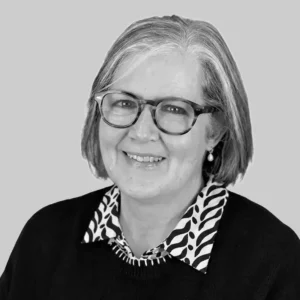
Marion Gannon
Joint Head of Life Sciences Research

Maria Colarusso
Head of Digital
Q: How are biotechnology organisations adapting to the current wave of geopolitical and economic uncertainty?
Andrew: It has been a turbulent few years. First COVID shut down supply chains and forced pharma and biotechs to find entirely new ways of sourcing products and equipment that would help get their products through R&D and to market. Just as things stabilised, the sector was hit by fresh geopolitical and economic pressures.
Marion: Also, drug developers and manufacturers have become far more cautious and have needed to be more adaptable. Where they once relied on a single supplier, they are now establishing expanded networks of primary and secondary suppliers across different regions and often moving them closer to manufacturing sites to reduce risk. It is challenging in the short term, but the sector has learned a lot and is better prepared than it was pre-COVID.
Andrew: Finally, as a result of all of this, budgets for market research are becoming increasingly tight, so we’re seeing that clients are asking us to help them do more with less, which means we have to look at more innovative approaches to maximising budgets and maintaining value in our offer to them.
Q: What regulatory changes are having the biggest impact on clients today?
Andrew: Regulation is the backbone of this industry, but right now the system is struggling to keep up with the science. Long established modalities such as mAbs present fewer issues but newer and emerging technologies such as Cell and Gene Therapies, mRNA, etc. are more challenging. Drug manufacturers are developing processes and protocols with greater degrees of uncertainty as to whether they will actually be approved by the regulatory bodies.
Marion: For our clients – primarily providers of equipment, consumables and systems that biopharma/biotech companies use to develop and manufacture therapeutics – they are having to adapt and become regulatory experts themselves by demonstrating their ability to work with the regulatory bodies and provide proof that the solutions they offer will pass muster. Their clients are often looking for pre-validated equipment and data that will help speed up the approval process, rather than having to evolve compliance and guidelines at the same pace as, or even faster than, the regulators themselves!
Q: How are your clients adjusting to the rise of new entrants or start-ups?
Marion: The landscape is changing, but clients are not necessarily treating newer and smaller players as threats. Instead, they are looking at how to help them flourish. Growth in this space depends on a healthy pipeline of new technologies, so we are seeing more collaborations, more partnerships and more creative funding approaches.
Andrew: We’ve also seen increased interest in outsourcing elements, particularly for smaller organisations. With the current economic climate, few are in a position to invest in GMP facilities, so science parks or flexible facilities that early-stage companies can rent rather than build and/or delay investment, hold great attraction.
Marion: We’ve also found that our clients are looking at innovative ways to support smaller organisations. Some are offering loans or designing novel ways to support biotechs and academic spin outs in the development and commercialisation of new products. Strategic partnerships and M&A activity are also more common as equipment and solutions manufacturers look to acquire or align with emerging technologies early.

Q: How is AI changing the way insights, analytics and research are delivered?
Andrew: AI is absolutely reshaping all of the work we do in health, and we have adapted in response to this. For example, we’ve established Nucleus, our AI hub at STRAT7, which serves as a centre of excellence embedded across everything we do. By integrating advanced AI capabilities with expert human insight at every stage, we’re able to deliver projects faster – without ever compromising on the quality and strategic thinking our clients expect.
Maria: A specific example is using our online platform, Whycatcher, which allows us to analyse confidential/client data according to current data protection regulations and can handle labour-intensive tasks like reviewing large volumes of unstructured data, identifying quotes or themes and highlighting patterns with much greater efficiency than before.
Andrew: Which means that we can then focus more time on interpretation of the data and bringing valuable insights to our clients, rather than on manual processing.
Maria: We also use Maya, our AI moderator, for natural conversations in digital research where respondents are capturing and reporting on their own experiences – and Maya can ask questions to get a deeper understanding of those moments. This works great in ethnographic contexts or where we’re trying to understand complex decision-making journeys.
Andrew: We are also applying AI at quantitative scale, where we can also analyse emotional tone, sentiment and behavioural drivers across large samples, which until recently has typically been the preserve of qualitative projects.
Marion: And just to add, we’ve been hearing that those organisations working in early stage R&D are using AI to refine processes, compare molecule performance and model which of their prototypes offer the greatest hit to lead opportunities, and therefore help guide allocation of their already depleted R&D funds. There is some worry that this approach may mean loss of opportunity as AI may reject some potentially good ideas. Engineers and systems people are excited by the prospect of AI, ML and to a lesser extent Quantum in the future, and it’s still early days for much of this, but overall, assuming tools are used responsibly, they present greater opportunities than threats.
Q: What are the key ingredients to delivering actionable insights, not just data?
Andrew: Actionable insight now relies on triangulation; one data source is almost never enough, especially for high-stakes decisions. Where possible, we bring together client CRM data, sales data, market size, primary research and other sources to create a clearer, more robust picture.
Marion: Furthermore, what gives us a major advantage, is that we can bring in the right experts from across the group, combine methodologies and build integrated solutions that draw on multiple perspectives. Our clients appreciate having a single point of contact while benefiting from the depth of an entire ecosystem.
Q: What motivates you personally about working in the biotechnology sector?
Marion: I think everyone in the team would say the same thing – impact! You talk with people who are developing treatments that genuinely improve or save lives. You talk to scientists who are pushing the boundaries of what is medically possible. You see things in the news and think, “I helped with that.”
Andrew: There is also something special about the people in this sector. They are mission-driven, collaborative and genuinely passionate about improving health. The job we do as researchers does not have the global impact of these people, but I think we share their passion and drive to learn about the sector and the work that is being done and want to play a part in that. The work is demanding at times, but incredibly rewarding.
STRAT7 Health is a specialist team consolidated from across the group with expertise in the Pharma and Healthcare industries.
We bring the foresight, strategic clarity and bold thinking that turn complexity into competitive advantage.
